Showing posts with label poetry feature. Show all posts

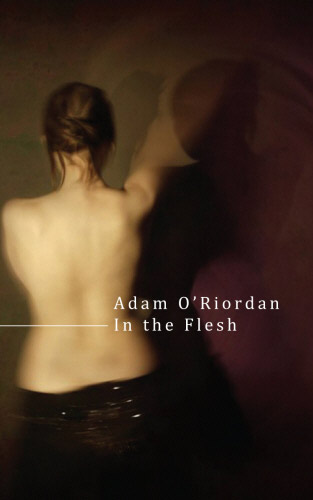
Adam O'Riordan, In the Flesh

Posted by Expert Gadget Reviewer on Sunday, 6 June 2010


This year looks like it’s shaping up to be an interesting one for new British poetry. There are several exciting debuts that have recently been released or are shortly forthcoming, not least Sam Willetts’s New Light for the Old Dark, which I mentioned here a couple of months back, Miriam Gamble’s The Squirrels are Dead, a first book of rhythmically taut poems that, if the stuff of hers I’ve spotted in magazines and elsewhere is anything to go by, will include lyrics and narratives from animal and curiously alien perspectives, and, of course, Dan Wyke’s long awaited debut with Waterloo, whose subtly suggestive poems address the domestic, familial and everyday with knowing insight.

One book I’m particularly looking forward to, though, is the first full collection from Adam O’Riordan. Titled In the Flesh and due to appear from Chatto & Windus this July, it follows on from a pamphlet, Queen of the Cotton Cities, published by tall-lighthouse in 2007 as one of the first in its acclaimed Pilot series, and winner of an Eric Gregory Award. A short volume of only sixteen poems, this pamphlet was the first introduction readers got to O’Riordan’s work, but it leaves a lasting impression: lyrical, thematically wide-ranging and Donaghy-like in its formal panache, the poems combine dazzling metaphor and simile with sudden shifts in perspective and detailed, provocative contemplation.

Having read an early proof, I’d certainly say that In the Flesh builds on this early promise, including many new longer poems and a sequence of sonnets, ‘Home’, which imagine episodes from the lives of William and Dorothy Wordsworth, inspired by O’Riordan’s time as the Wordsworth Trust’s Poet-in-Residence at Dove Cottage. On the strength of the collection taken as a whole, I’m even inclined - for once - to agree with the publisher’s hype, which describes O’Riordan’s poems as “confident, seductive, and thrillingly assured […] seeking familiarity in a world of ‘false trails and disappearing acts’ […] in language both clear-eyed and sensuous”. Adding to that list of superlatives, I’d also call his stuff jaunty, vibrant, and satisfyingly disorienting: take vignette ‘NGC3949’, below, as an example of his ability to marry incongruous subjects in atmospheric and convincing conceits. And since it's often interesting to hear a writer's own thoughts about their work, as well as a bit of background, Adam answers a couple of questions below.


NGC3949

is a galaxy in Ursa Major whose formation mirrors, almost exactly, that of our own.


Back from the perforated dark and growing distance,
Hubble’s milky image brings us to ourselves.

The echo pitched up from the moss-wet well:
a lover’s shape, that indelible stain on the iris.

(Years down the line, you swear blind
the cut and sway of a dark form is her.

Neon dazzles the rain-slicked street
as you wave away the cab and push

back down through the crowd into the bar,
pilot charting the wrong star by candlelight,

leagues off course, the face, of course, is another’s.)
In this spiral galaxy the arms embrace the core.

Not her – or your idea of her – and never will be.
It doesn’t matter how beautiful your guess is.


© Adam O'Riordan, reproduced by permission of the poet


BW: One of the first things readers will notice about In the Flesh is a strong sense of place threaded through the collection: Manchester, the Lake District, specific locations such as a college window in Cambridge or an escalator in Paris. Can you tell us a little about your background, upbringing, and what we might call your 'imaginative hinterland', and how you see these as contributing to your writing?

AOR: I was born in Didsbury in South Manchester.

My father’s family were from Scotland. His father was a third generation Irish immigrant and the third generation in public service, in his a case as a career naval officer. His mother from Fife, what you might call, haute-bourgeoisie. She was a descendant of Sir Michael Nairn, the linoleum manufacturer who took his father’s floor-cloth business and industrialized the process.

My mother’s family were a mix English, Scottish, and Irish. Her father’s family had come down from Aberdeen where they worked in the fisheries to work in the newly built Trafford Park, the world’s first planned industrial estate. Family legend has it they sailed down on board a fishing boat during the herring famine.

My father worked in Trade Union education, in fact he met my mother when they both at the same college. They were both active in the Labour party and for a period my mother ran the office of our local MP.

I was the first generation on my father’s side to go to a State school, but the fourth or fifth to go to Oxbridge.

I suppose these factors made me acutely aware of class and identity but also the fluidity of both. Leaving me feeling not particularly at home, or too uncomfortable, in any.

I remember my father telling me about an exercise called ‘Dig Where You Stand’ from a book of the same name by a Swedish historian Sven Lindqvist which encouraged workers to re-discover their history.

My poem ‘A Trade Union College’ from the ‘Vanishing Points’ sequence recalls a story my father told me about teaching a group of shop stewards as a young man and carrying out the exercise. Part way through he realized that the college they were in had once been a rather grand private house and was the place his mother was born. Though apparently they didn’t give him too hard a time about it.

The other poems in the sequence looks at similar themes – flux and change and forgetting of identity. The poem ‘A Wedding Letter’ takes a note written by the son of my last Gaelic speaking ancestor on the night of his daughter’s wedding in 1906. He describes in a wonderfully Edwardian way how she ‘would carry her hospitality to extravagance’ and ‘never spoke English with any satisfaction’.

It occurred to me in reading the letter that once it was lost or forgotten that the woman (my great great great grandmother) would vanish. It was that chilling sense of erasure coupled with the privilege of being perhaps one of the last to catch a glimpse of her in that description.


BW: That title, In the Flesh, captures well the blurrings between the sensual and the violent, the physically beautiful and the rawly animal, which much of your work centres on. Do you see this as an especially contemporary concern?

AOR: I think it’s always been there. Certainly in the lines and traditions I respect and have learned from: think of Yeats’s Leda and the Swan with that ‘’sudden blow / the great wings beating still’.

I always loved that line in Romeo and Juliet where Mercutio, in a lovely coupling of the two, describes Tybalt as ‘the very butcher of a silk button’.

I remember when I was in residence at The Wordsworth Trust showing my collection in progress to Pamela Woof, the president of the Trust and academic. She wrote a note to me talking about ‘the nearness of violence to beauty, of beauty to the vulnerable’ which I think captures it.

I struggled with the title for a long time. I wanted something that suggests not just the blurrings of sensual and violent you mention but also a sense of presence and absence and the familia. I think ‘In the Flesh’ ties it all together quite well.
More aboutAdam O'Riordan, In the Flesh

Robin Vaughan-Williams: The Manager

Posted by Expert Gadget Reviewer on Tuesday, 27 April 2010


Managers, offices, the daily grind, rows of computer screens, crap coffee machines ... a fair number of contemporary poets have been swift to pen their thoughts on the typical working conditions of modern life, but a new pamphlet I recently received, The Manager, is, I think, a novel and original take on the 9-5 world that most of us inhabit. As its title suggests, it centres on the shifting persona of "the manager", in a sequence that moves from the serious to the irreverant and from the depressing to the uplifting with surprising ease. A few excerpts to pique your interest:

The manager has proverbs on the wall about being a good man
and he reads them at times of intense isolation

when his office has become a cell
and the laughter in the next room is a barrier

he has not the skill to clear.
(Manager #1: Mantra)

The manager burns, he burns
with the heat of an example
others will follow: a new kind of leader.
(Manager #5: Health & Safety Incident)

The manager's eyes are not his own.
He has seen more than one man can bear.
He has seen the high street of humanity,
the bargain hunters, shop lifters,
just looking, and disfigured returns -
receipt or no receipt, that's policy.
(Manager #8: The Manager's Eyes)

Doesn't he realise how vulnerable I am?
I'm a sensitive person.
'I'm a poet,' I say.
'You can't fire me,
I'll put you in a poem.'

'Not a very well known poet,' he says
and fires me anyway.
(Manager #10: Fired!)


Thought-provoking and entertaining, it's a pamphlet that's consistently effective and insightful but at the same time understated, and which doesn't take itself too seriously. Well worth getting a copy, available from HappenStance press at £4, which isn't much more than that extra pint down the pub on a Friday.
More aboutRobin Vaughan-Williams: The Manager

The Mole

Posted by Expert Gadget Reviewer on Wednesday, 15 July 2009

Over at her blog, should you fancy a look, Carrie Etter has kindly featured a poem from The Sparks, as part of a (very) brief tour of blogs I thought I'd do to promote the pamphlet.

The poem is 'The Mole' (hence the photo above), and was first published in the Times Literary Supplement early last year.
More aboutThe Mole

Poetry Feature: Carrie Etter's The Tethers

Posted by Expert Gadget Reviewer on Thursday, 4 June 2009


Blurb writers often describe debut poetry collections as "long-awaited", but I can honestly say that I've been looking forward to Carrie Etter's first collection for a good while, having enjoyed many of her poems in magazines, not least the TLS.

And now I happily find that Etter's first book, The Tethers, is to be published later this month by Seren. Having already attracted praise from the likes of Glyn Maxwell and Robert Crawford, it promises to be a highly distinctive and original collection of poems, partly given Etter's fertile imagination, but also her background as an American-born poet who has lived in the UK for many years, drawing on poetic traditions from both sides of the Atlantic.

I'm delighted, then, to feature The Tethers here on the Wasteland, and include a poem from its pages below. I hope the collection attracts the prize shortlistings it will no doubt deserve, and would encourage readers who enjoy witty, sophisticated and thought-provoking poetry to visit the Seren publishing website, Etter's own blog, and check out the collection on Amazon. Enjoy.


The Review

So at Starbuck’s you stood in line
behind The Review’s assistant managing editor?
A skinny cappuccino? Were you close enough
to detect her brand of shampoo?
There is no need to name The Review:
it is the one that, when mentioned, inclines all bystanders
toward its vocalization until they ascertain
the nature of the allusion and proceed accordingly.
If you are an author whose work appears in the current issue,
at least two well-scented women will brush your arm “inadvertently”
and one man will strive to prolong your stay in his presence
with a look of surpassing interest.
Publication in a past issue creates a circle
of brightened eyes, however nonchalant some try to act,
and a member of the opposite sex will ask
what you’re having and bring you another
whatever the volume in your present glass.
If The Review has never accepted your work
and you live in the same city as its offices,
once a month you will find yourself unaccountably
walking past the building’s reflective panels and steel yourself
to look only ahead until you reach the end of the street,
but alas! you glance in The Review’s direction to see
an image of yourself that seems disparagingly untrue.
Some neglected authors cannot stop thinking of The Review:
they can recount the highlights of senior editors’ résumés,
and a simple “Sorry” handwritten on the rejection slip
gives them days of delight, even though they suspect
a mere intern has so condescended. A mere intern!
No one at The Review is mere. The janitor may know
whose manuscript lingers on whose desk.
The Review’s aura has an impressive breadth.
Even I feel giddy from speaking so long of it.


poem by Carrie Etter
from The Tethers (Seren, 2009)
republished with permission of the author
first published in the Times Literary Supplement
More aboutPoetry Feature: Carrie Etter's The Tethers

Poetry Feature: Conor O'Callaghan

Posted by Expert Gadget Reviewer on Sunday, 8 March 2009


Conor O’Callaghan, an Irish writer born in Newry in 1968, is one of those poets who critics may lazily – albeit quite rightly – describe as ‘one of the best of his generation’, though he actually seems to fall on the cusp of two generations. Or at least has fallen short, despite having appeared in seminal Irish anthologies, of major British anthologies and promotions – too young for the New Poetry and the PBS’s New Generation campaign; inexplicably missing from the Next Gen and falling short of the cut-off point of Roddy Lumsden’s forthcoming Identity Parade – as inadequate as these may ultimately be at fully checking the pulse, let alone establishing the hierarchy of the literature of a given period (history will do that), they still (usually quite rightly) cement reputations, develop readerships, and give a representative flavour of poetry at the time. This isn’t to badmouth these publications or promotions, but to note that given the inevitable parameters, some genuinely talented and worthy writers often get sidelined or miss out through nothing more than plain bad luck.

This aside, I hope I’m right in reckoning that O’Callaghan’s work will stand the test of time. I can only reach for the usual platitudes in urging you to hunt down copies of his three collections published by Gallery Press to date – The History of Rain (1993) and Seatown (1999), collected together in Seatown and Earlier Poems (2000); and the excellent Fiction, published in 2005 – showcasing the development of an exciting and original poetic voice sounding itself out in poems that are engaged and engaging, witty, smart and sharp, but above all, driven by an energetic music that is as capable of challenging and amusing as it is of moving the reader.

In his review of Seatown in the Times Literary Supplement, Stephen Knight pointed to James Fenton, Robert Frost and Philip Larkin as pronounced influences in O’Callaghan’s work, and for those who are fans of any of these major voices in post-war poetry, you won’t be disappointed by his poems. But at the same time, quite rightly, Knight states that ‘despite the presence of these pungent voices, O’Callaghan’s poetry is marvellously his own’. This is largely to do with the knowingness of the poems, which amounts to more than the winks, nudges, sarcasm and irony that crop up in much contemporary verse. Instead, particularly in Fiction, O’Callaghan’s poetry combines the suggestive, deliberative and symbolic capabilities of verse with the inventive, imaginative qualities most readily associated with fictional prose, often to startling effect. This includes the likes of ‘Out-takes’, exploring the sounds left behind from a recording session (‘leftovers from a cleaned up / final version’; suggesting our polished, distorted view of ourselves); ‘Reception’, where the poet remembers an event from his childhood which turns out to be a story he was told ‘over a glass of ropey Chianti’; ‘Hello’, a sequence of poems exploring the invention of that phrase for ‘the blower, / since some kind of formula / for an opening exchange / had to be agreed upon / to get the ball rolling’; and the excellent vignette ‘The Narrator’, who ‘during the break in chapter / gets up to stretch beneath a skylight’, a theme returned to in ‘The Present Writer’, who ‘gets a kick / inhabiting the third person, as if talking across himself / or forever clapping his own exit from the wings’.

In short, O’Callaghan stuff is the business and deserves a wide readership. And needless to say, his next collection will be well worth waiting for. In the meantime, though, do check out the three poems of his which appear in this month’s issue of Poetry magazine, and the comic ‘The Modern Pastoral Elegy’ in that magazine’s archive. And rather than my blathering on any further here, I’ll let the poetry speak for itself – below is ‘Coventry’, the sonnet that opens Fiction, first published in the TLS.


Coventry


On a night as clear and warm as tonight,
in 1941, a stray German squadron
with a war to win and a radar on the blink
mistook the quays of neutral Seatown
for the lights of greater Coventry.

On a night as clear and warm as tonight –
when she has gone into an almighty huff
and taken the chat over heaven-knows-what
(or something of nothing with a bit of fluff)
and my lot once again is the box-room futon,
the guest duvet –
                                  I am inclined to think
perhaps the Luftwaffe after all were spot on,
and would give my eye-teeth for butterfly bombs
to fall into this silence I have been sent to.


poem by Conor O’Callaghan
republished with permission of the author
first published in the Times Literary Supplement, 20 October 2000
from Fiction (Gallery Press, 2005)
More aboutPoetry Feature: Conor O'Callaghan