Showing posts with label review. Show all posts

Seeing Stars

Posted by Expert Gadget Reviewer on Wednesday, 3 November 2010


Alongside a slightly lengthier piece on John Fuller's latest collection, Pebble and I, by William Wootten, the current week's TLS (29 October) contains my review of Simon Armitage's latest book, the PBS Choice (and so automatically T.S. Eliot prize-shortlisted) Seeing Stars. A new direction for his work, sure, but is it actually any good?
More about → Seeing Stars

To The Lighthouse

Posted by Expert Gadget Reviewer on Monday, 29 March 2010


For those interested, my review of the last four poets to produce pamphlets as part of Tall-Lighthouse's Pilot series (published 18 younger poets over the course of three years) is up now at Stride magazine. Charlotte Runcie, Richard O'Brien, Ailbhe Darcy and Simon Pomery - all very different writers, and all names to look out for in the future, not only when their first full collections appear, but when the annual Society of Authors' Eric Gregory Awards are announced in the coming years, no doubt.
More about → To The Lighthouse

Moon

Posted by Expert Gadget Reviewer on Sunday, 16 August 2009


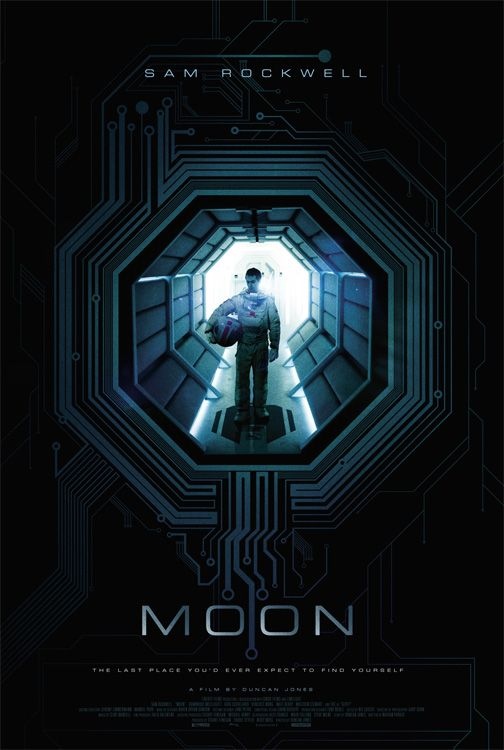
A few weeks ago I went to see Moon, the excellent debut film from director Duncan Jones (once known as 'Zowie Bowie') - an impressively eerie, cerebral and often darkly funny piece of sci-fi cinema that details the life of a man alone on the lunar surface. I highly recommend it, and briefly entertained thoughts of writing a lengthier piece about it here, but then a friend of mine has recently set up a film review blog, and has done an excellent job of writing an intelligent and incisive piece on the film. So I needn't bother waffling on - instead, you can read the review here. What's more, it doesn't completely give the game away unlike many reviews I've read of Moon, which means if you do decide to go and see it, this review won't ruin your experience of it.
More about → Moon

New Poetry @ Poetry Matters

Posted by Expert Gadget Reviewer on Tuesday, 7 April 2009


Just wandered across to the Tower Poetry site (a poetry venture run by poet-critic Peter McDonald at Christ Church College, Oxford) to find that the latest issue of Poetry Matters is up. And it's good to see more poetry than prose there for a change - its reviews, though always engaging and worth reading, are something of a regular feature compared to new writing. But in this issue, no less than four poets grace its webpages, including Stephen Romer, Emily Middleton, and Paul Abbott, whose Flood I reviewed for PM last year. There're also a couple of my own new(ish) poems. If you're not about to head out and enjoy the good weather, then, do head across and have a read. There's also a review of Peter Porter's cheekily named Better Than God, by Vidyan Ravinthiran, which, at least for me, provided an interesting window on a well-established poet whom I'm criminally unfamiliar with.
More about → New Poetry @ Poetry Matters

Nick Laird wins Geoffrey Faber Memorial Prize

Posted by Expert Gadget Reviewer on Wednesday, 1 April 2009


Good to see that Northern Irish poet and novelist Nick Laird has won the 2008 Geoffrey Faber Memorial Prize for his second collection of poems, On Purpose, published by Faber in 2007.

The award - given alternately each year to a work of prose or verse - was judged by poets Jo Shapcott and Michael Longley, and Sam Leith, literary editor of the Daily Telegraph.

It puts Laird on a distinguished list of previous winners, including Seamus Heaney, Hugo Williams, Geoffrey Hill, Tony Harrison, Don Paterson and Michael Hofmann.

Having enjoyed and reviewed the collection for the Winter 2007/08 edition of Irish literary journal The Stinging Fly, I recommend it to readers unfamiliar with Laird's work, as well as his first collection, To a Fault. Here's an excerpt from my review of On Purpose:

What is most impressive about On Purpose, however, is Laird’s charting of the loose and difficult territory of the existential crisis between our desire to control our lives and act with certainty and conviction, as set against the possibilities and inherent unpredictability of the world we actually encounter. As Don Paterson rightly urged in his T.S. Eliot lecture in 2003: ‘It’s important that poets remember that our first perception of the world is already a misinterpretation’ (though one, it must be noted, that is no less valuable than every other). Laird often succeeds within these poems, then, in exploring that which is – both personally and universally – so often beyond our grasp and understanding, be it in the narrator’s failure to describe a beautiful vista in ‘Use of Spies’, the attempt to break habits of a lifetime and escape blinkered perspectives in ‘Variation in Tactics’, or the dedicated hunter’s speculation and failing faith in some higher power in the sombre tones of ‘Hunting is a Holy Occupation’. Laird’s poetic voice has gained an added maturity and distinctiveness since his first collection, too; gone is the unconvincing ‘newladspeak’ that knocked the shine off some of his earlier work, honed into a style that allows for poems of greater brevity, rhythmical execution, and despite a deliberate variance in seriousness of tone, real feeling. Like Armitage, he is an impressive and distinctly male writer of love poems: the expression of masculine emotion and its awkwardness measured and balanced with an economy of sentiment, as in the narrator’s stating ‘Love, I’d turn for you clean-living, / relinquish drinking, fighting, singing’ in ‘The Present Writer’. And the more I read those poems of Laird’s that explore the rural and urban landscapes of Ireland, Britain, and beyond, the more I think it not an overstatement to compare his rich descriptive powers, during their finer moments, to Heaney’s. Take the following glittering stanzas from ‘On Leaving the Scene of an Accident’:

In the eastern suburbs deer appear.
Brushed by waist-high silver steppe grass
and the lighter strokes of barley stalks,

elegant as one might half-expect
the grazing self to be, except her grace
is one complicit in departure.


For those interested, the Guardian coverage is here.
More about → Nick Laird wins Geoffrey Faber Memorial Prize

PoetCasting and Samantha Wynne-Rhydderch

Posted by Expert Gadget Reviewer on Saturday, 7 March 2009

I've mentioned PoetCasting on the Wasteland before - an admirable and, I think, extremely valuable collection of audio recordings of established and emerging contemporary poets, professionally put together by the enterprising young poet Alex Pryce. Andrew Motion's Poetry Archive should watch its back.

Well - shameless self-promotion alert - having been featured on the site in a joint venture with literary magazine Pomegranate, showcasing young poets published in the magazine since its beginnings, I've my own feature on the site now, including recordings of four poems from the sparks.

It was great of Alex to come up and record this and, more generally, for her to run PoetCasting so professionally and diligently in the first place (on visiting Sheffield, she recounted how whenever her mother rings her up, she's invariably on a train heading someplace or other to make a recording). Unsurprisingly then, the poets featured on PoetCasting to date span the height and breadth of England, Scotland, Wales and Ireland, and more are always being added. In fact, on the same day my recordings were done, Gregory Award-winning Sheffield writer Chris Jones and Faber poet Maurice Riordan were also recorded reading, both of which'll no doubt be added to the site soon.

Do take a look at the PoetCasting site then, and if you like the sound of what you find there, subscribe to their feed for regular updates.

Also, on a slight tangent, for those interested in the work of Welsh poet Samantha Wynne-Rhydderch, my critical perspective of her poetry is now up on the British Council's Contemporary Writers website.
More about → PoetCasting and Samantha Wynne-Rhydderch

Review: Antidotes by Foals

Posted by Expert Gadget Reviewer on Tuesday, 14 October 2008


I meant to review British math-rockers Foals’ first album a few months back, but what with one thing and another, haven’t had chance to get round to it. Having seen them live when I spent three excellent and largely rain-free days reviewing Latitude Festival this summer, however, I wanted to say at least something about them. And that’s pretty much that, with only a couple of months left before 2008 draws to a close, the 11 tracks on Antidotes will almost certainly make up the best debut British music release of the year.

I first came across Foals with the initially inauspicious release of their debut single, ‘Hummer’, which went on to gather a bit of attention when it was later used to promote the second series of Channel 4’s Skins. Since then they’ve played numerous festivals this summer, the pulsating bass and spiky guitars of tunes like ‘Cassius’ have become unlikely club dancefloor hits, and the band have had a fight with tame anarchist and Sex Pistols frontman Johnny Rotten at a gig in Spain. A hectic year, then, with bookings for major festivals across Europe being testament to the strength of Antidotes as an album.

First things first, though – it isn’t going to be to everyone’s taste. As lead singer Yannis Phillippakis self-deprecatingly quipped on Buzzcocks earlier this year, ‘we’ve made a record that’s just solid drones for 40 minutes and no songs. It’s funny – all these people have tipped us and it’s absolutely unlistenable.’ But then unlistenable to one person – as my word processing spellchecker happens to offer as a supposed correction – is unmistakable to another, and if Foals have a future an album or two down the line, it’ll be through unique inventiveness and an aesthetic that places as much importance on catchy hooks and danceability as experimentation and artistic integrity.

First track ‘The French Open’ sets out Foals’ stall quickly enough: a brass drone that builds to sparse drums and layered, trebly guitars that are punctuated by Phillippakis’ unusual vocals – sounding as if, on certain tracks, he’s shouting them across to a mic on the other side of a concert hall. Single ‘Balloons’ is a similarly energetic, raucously orchestrated number, ending abruptly in a swarm of electronic bleeping, while ‘Two Steps Twice’ sounds like a Bloc Party and Battles collaborative. Where Foals really come into their own, however, is in the dense, thought-provoking and often eerily suggestive soundscapes of songs like ‘Heavy Water’, its almost flamenco-style guitar rising to carefully arranged horns and soaring synths, and easily the album’s highlight, ‘Electric Bloom’, a brooding and darkly contemporary arrangement that glitters with cryptic lyrics and its pulsing, addictive bass line.

If there is a criticism of Antidotes as a debut album, it's the repetitious core that lies at the heart of many of its songs: the trebly, spidery guitars do eventually tire, and the fug of depression that dominates the album’s tone, while unusual and admirably imaginative in execution, is already too much well before the wailing close of last track ‘Tron’. But on the whole, Antidotes certainly delivers a refreshing and intelligent alternative to the facile indie-pop of recent bands like The Kooks and the Hoosiers, and for that, Foals deserve the recognition and relative hype that has recently surrounded them. If they can expand their emotional range and already impressive sound, they’ll be onto a real winner.
More about → Review: Antidotes by Foals

Moniza Alvi in this week's TLS

Posted by Expert Gadget Reviewer on Thursday, 2 October 2008


Just a snippet of news in that I've another review in the TLS this week, following on from last week's 'In Brief' piece on Stephanie Norgate's Hidden River; this week's a more substantial review, covering both Moniza Alvi's Split World, Poems 1990-2005, and her latest PBS Choice collection, Europa. Do check it out if you can.
More about → Moniza Alvi in this week's TLS

By Way Of An Update

Posted by Expert Gadget Reviewer on Saturday, 27 September 2008

Adding to the woeful pattern that's been developing around here this is just a short post and mini-update, so for those of you who do stick around the Wasteland, my thanks and also apologies; I promise I'll post something meatier in the future.

Last weekend I went down to London, and had a very useful (and entirely painless*) editorial meeting with Roddy Lumsden, going through the poems that'll be included in my forthcoming tall-lighthouse pamphlet, The Sparks, to be published alongside Emily Berry's with a launch on November 14th - details on the TL website. I'm feeling slightly more confident about the whole thing, as the meet helped to re-shape certain poems into what - after rewriting - will hopefully be tighter, stronger pieces, and tidy up weaknesses in others that are closer to completion. It was also great to see Roddy perform his own work at the Betsey Trotwood in the evening, and meet other tall-lighthouse Pilot poets who also gave good readings, Retta Bowen in particular. For those interested, my reading 'set list' was as follows:

1. Sunday
2. Byroads
3. The Tesla Coil
4. Filter
5. Lights Out
6. Reflections
7. Hex

It was good to catch up with old friends in the capital, too, not least a school pal who happened to be down for the day before he travels to the States for a few months, who I met by total coincidence on the tube. Unfortunately however, this weekend promises to be less enjoyable, as I've an increasing pile of editing, writing and menial tasks on my to-do-list. Still, I'm enjoying getting properly stuck into Leontia Flynn and Zoe Skoulding's work for critical perspectives I'm writing of them, so it's not all bad...

In the meantime then, before I get around to writing something substantial here, I'll mention that my critical perspective of Faber poet Hugo Williams is now up, and my review of Stephanie Norgate's Forward Prize-shortlisted first collection, Hidden River, is in this week's TLS. Now I'm off to shop for socks and a new pair of trousers. At least it's sunny out...


*Which is to say no poems, or poets, were harmed in the process.
More about → By Way Of An Update

Manifold and Nthposition

Posted by Expert Gadget Reviewer on Tuesday, 5 August 2008


Just a bit of self-promotion in that two new poems of mine have appeared online: one in the August edition of Nthposition, and another in the new poetry journal Manifold, edited by Adam Piette and Alex Houen of the University of Sheffield.

Manifold's first issue also features work by an eclectic variety of poets, including Carcanet editor Michael Schmidt, fellow Sheffield poet and Gregory Award winner Chris Jones, and recent National Poetry Competition winner David Kennedy, as well as reviews including of Jen Hadfield's Forward-shortlisted collection, Nigh No-Place. The publication is well worth a read and is accepting submissions for future issues - details on the site.

In Nthposition this month there's also poetry from Claire Sharp and John Hartley Williams, but I haven't had a proper chance to get stuck into it yet. Do check both out, though, if you get the chance. More substantial posts to (possibly) follow soon. In the meantime, happy reading.
More about → Manifold and Nthposition

Mick Imlah: The Lost Leader

Posted by Expert Gadget Reviewer on Saturday, 7 June 2008


His first collection of poems in twenty years (since the acclaimed Birthmarks in 1988), and Mick Imlah's new Faber volume, The Lost Leader, is sure to be one of the most significant poetry books published this year. In this weekend's Guardian, Peter McDonald reviews it.
More about → Mick Imlah: The Lost Leader

The TLS

Posted by Expert Gadget Reviewer on Thursday, 24 April 2008

Alongside reviews of Matthew Francis's new Faber collection, Mandeville, Dennis O'Driscoll's Reality Check, and what looks to be an interesting feature in the Commentary section on Movement poet Thom Gunn, I've just checked the TLS website to find that my poem 'The Mole' is published in this week's issue (25th April).

This is my second poem in the TLS - and hopefully not the last - after a short sequence on the scientist Nikola Telsa appeared back in February 07. Do pick up a copy if you get chance.

In other news, I should also be reviewing an interesting new pamphlet collection soon - Flood, by a young poet called Paul Abbott. It's published by Clutag Press, an Oxford-based publisher who specialise in high quality pamphlets (having recently published work by Mick Imlah, Tom Paulin and Seamus Heaney), and is promisingly described as "a Waste Land for the twenty-first century".

Which reminds me - for those who are interested, the Tower Poetry competition winners for 2008 are up on the site. Good to see Pomegranate poet Richard O'Brien commended.
More about → The TLS

New Irish Poetry

Posted by Expert Gadget Reviewer on Wednesday, 26 March 2008

Just a snippet of news in the form of my review of Barbara Smith's Kairos and Fred Johnston's The Oracle Room appearing on Eyewear.
More about → New Irish Poetry

Review: Jay Bernard's your sign is cuckoo, girl

Posted by Expert Gadget Reviewer on Monday, 28 January 2008


Wow. Cock-ups on the Royal Mail’s part aside, and Jay Bernard’s first pamphlet (from the peeps at Tall Lighthouse) was well worth waiting for. What I like about her poems – and what this short gathering of only fourteen demonstrates – is a young, lively and energetic voice sounding itself out, but with a musical and rhythmical conviction that demonstrates a young poet who’s well read, yet unafraid to take what she likes and make it that bit more freer, exciting and wonderfully weird. Take opener ‘Kites’:

Is it true that I was frightened of the dark?
If I sat alone and watched the shadows of the room,
it is because I stood with my ear against the wall:
the words I heard were like a corpse
beside my bed or a hole that appeared
in the centre of the moon.

That’s just the first stanza and it’s a strong, beguiling opening that unfolds into a vivid, sensual poem. Here, the ‘quiet voice’ from the poem’s narrator ‘chim[ing] through the country of […] youth’ may bear resemblance to Duffy, but ‘the man piercing his cheek’, ‘a woman with scissors […] singing bees’ and ‘sweat [like] a conglomerate of flies’ are all Bernard’s own, intensely unique images; capturing the otherworldliness of childhood interpretations and memories. ‘Eight’ is a similar exploration of childhood – that which the Surrealist AndrĂ© Breton once called ‘the only reality’ – where an anonymous female adult is suddenly seen by the narrator through a bathroom door, ‘watch[ing] her ease her apple weight over the side of the / bath’. The poem’s closing stanzas are particularly impressive: a subtle, beautiful and enchanting description that merges the reader’s gradual realisations with the child’s.

What else stands out? ‘Kid Moth’, which Pascale Petit originally snapped up for Poetry London magazine, is a well-executed extended metaphor, and the image of her ‘twenty feet up / high on a pole of a street lamp […] / dream[ing] that she could graze its cusp’ makes for a particularly vibrant ending, though perhaps the tendency to include images for the sake of the images themselves is something that Bernard could reign in. After all, the often brilliant musicality of her poems aside, as a poet who combines page and stage so effectively Bernard nonetheless runs certain risks: namely that while such effects may fair well in performance, they can often seem cumbersome on the page. Thankfully, this doesn’t affect the general impression of technical skill and creativity evident in most of the poems, however, and ‘The Pier’ is proof of Bernard’s being at home with tightly controlled rhythmical precision as with the imaginative and often surprising lyrical wanderings that dominate this book.

Other highlights include ‘tongues in velvet’, a rapid and engaging poem that swings between confessional tones and an exploration of the world of sex, drink and clubs, and ‘Cadence’, where the startling lines ‘Being young is an oxymoron - / our genes are old and gnarled as the moon’ demonstrates a young poet with the ability to step out of herself, to look at herself and the world with penetrative thought and a certain objectivity. As Pascale Petit states in the blurb endorsement: ‘Jay Bernard writes powerful and sensuous scenes from the metropolis […] disturbing, joyous and always surprising.’ She’s not wrong. For a young poet – for any poet – to display such a variety of technique and memorable images in only fourteen poems which, by and large, come off successfully, bodes well for Bernard’s future. I look forward to seeing how her work develops, and to a full first collection.


Jay Bernard, your sign is cuckoo, girl. tall-lighthouse, ISBN 1 904551 41 6 Order here.
More about → Review: Jay Bernard's your sign is cuckoo, girl

Jean Sprackland's Tilt

Posted by Expert Gadget Reviewer on Thursday, 17 January 2008

Alongside reviews of Frances Leviston's Public Dream and Sophie Hannah's Pessimism for Beginners, my review of Jean Sprackland's Costa Award-winning third collection, Tilt, is available, in the latest issue of Tower Poetry's Poetry Matters. You can find it here.
More about → Jean Sprackland's Tilt

Who Will Win the Eliot?

Posted by Expert Gadget Reviewer on Sunday, 13 January 2008

Tomorrow evening sees the judges’ final decision made, and Valerie Eliot, the widow of the great poet, will award this year’s TS Eliot Prize of £15,000 (what Andrew Motion has described as ‘the prize most poets want to win’) to the poet whose book is deemed most worthy.

Who’s for a little sweepstake, then? As Todd Swift noted on Eyewear, this year’s shortlist doesn’t quite seem to measure up to the vibrancy and variety of poetry published in the UK in 2007: neither Annie Freud’s wonderful debut The Best Man That Ever Was, Luke Kennard’s witty and funny The Harbour Beyond the Movie, nor Daljit Nagra’s dexterous and inventive Look We Have Coming to Dover! making it.

But then I’ve haven’t read some of the books on the shortlist, so perhaps it’s cast its net a bit wider than I first imagined. I’m not a big fan of Sophie Hannah’s work, though, even if the title of her latest, Pessimism for Beginners, is eye-catching and intriguing. Neither have I read Sarah Maguire or Edwin Morgan’s shortlisted collections, though I intend to get round to them. Though I’m particularly happy to see Alan Gillis’s Hawks and Doves make the listing: I appreciate the way his work combines good humour and sharp wit with gravitas and striking sincerity. As with his debut, this collection’s well worth investigating.

Elsewhere, and I think Matthew Sweeney’s Black Moon stands a good chance, as does editor of Poetry Review, Fiona Sampson’s Common Prayer. Sean O’Brien’s been shortlisted for the prize before, but having picked up his third Forward Prize for The Drowned Book, it seems unlikely that this collection will take the Eliot as well.

The rank outsider, of course, and the cause of much excitement for the media and publicity surrounding the award, is Frances Leviston, with her debut Picador collection Public Dream. For such a young poet to be shortlisted for the Eliot harks back to 2003 when Jacob Polley’s first, The Brink (another from Picador) was similarly shortlisted. But just as Polley lost out to a much more established poet (his editor, Don Paterson, who won his second Eliot with Landing Light), it seems likely that someone with a little more reputation than Leviston with take the prize this year. Not that Public Dream isn’t an impressive collection, of course, but as far as prizes go, that’s the way the cookie crumbles. Plus, things often tend to come around: I’ll be very surprised, for example, if she doesn’t take the 2008 Forward Prize for best first collection.

But for now, my money’s on Ian Duhig’s The Speed of Dark. Aside the fact that Duhig’s been shortlisted for an Eliot twice before (last in 2003, for the Lammas Hireling) and so in some ways the prize now seems overdue to him, the collection also plain deserves the recognition: taking the Middle Ages as a point from which to explore the problems of the present, post-9/11 world in creative and illuminating ways. For an insightful perspective on the collection, see Katy Evans-Bush’s review of it on The Poem, here. In the meantime, anybody else care to make a prediction?


The Speed of Dark by Ian Duhig (Picador)
Hawks and Doves by Alan Gillis (Gallery Press)
Pessimism for Beginners by Sophie Hannah (Carcanet)
The Meanest Flower by Mimi Khalvati (Carcanet)
Public Dream by Frances Leviston (Picador)
The Pomegranates of Kandahar by Sarah Maguire (Chatto & Windus)
A Book of Lives by Edwin Morgan (Carcanet)
The Drowned Book by Sean O'Brien (Picador)
Common Prayer by Fiona Sampson (Carcanet)
Black Moon by Matthew Sweeney (Jonathan Cape)
More about → Who Will Win the Eliot?

The Stinging Fly

Posted by Expert Gadget Reviewer on Wednesday, 31 October 2007

There are many good literary magazines out there, but Dublin's The Stinging Fly is a particularly admirable project: since its inception in 1998, it has strived not only to provide a much-needed platform for the short story, but dedicates itself to providing space for work by new and emergent writers, alongside poems and fiction by established writers as varied as Simon Armitage, Fiona Sampson and Bernard O'Donoghue.

It's also a handsomely produced publication, with a glossy cover showcasing the work of a new photographer each issue, and the magazine combines this professional look and feel with quality new fiction, poetry and reviews, as well as unique features such as 'First Passions', where a writer, publisher or literary agent describes their first encounters with, and their beginnings of love for, language and literature.

The current issue, then (pictured above), includes song lyrics by Paul Muldoon, exciting new poetry and short stories, and reviews of poetry by Thomas Kinsella, Dave Lordan, and my own review of Nick Laird's second collection, On Purpose, published earlier this year by Faber. Why not take a trip to The Stinging Fly's comprehensive website, then, and consider buying an issue or taking out a subscription? After all, it's not often that a magazine from humble beginnings becomes such a successful and essential publication, but can also lay claim to a press that publishes a collection of short stories (Kevin Barry's There Are Little Kingdoms) that has won the revered Rooney Prize for Irish Literature.
More about → The Stinging Fly

Review of Radiohead's In Rainbows

Posted by Expert Gadget Reviewer on Sunday, 28 October 2007

So it’s finally arrived, ready to download at the price of your choosing, and I’ve left the ‘publication’ of my views on the new Radiohead album a bit later than most bloggers (and indeed, newspapers). You might see this as an accidental act of defiance against The Daily Telegraph’s seemingly anonymous writer, who, as a self-proclaimed champion of paid reviewers for paper publications (shame he blogs too; quite the moral conundrum), states that: ‘One advantage of being paid for your opinion is that you can take some time to work out what it is.’

I wouldn’t say that was necessarily the case, however, as a glance at The Guardian’s Alexis Petridis’s review of the album, a mere two days after its release (bearing in mind no promo editions of the album were mailed out to music journos), reveals. ‘A five star review’, asserts the headline, followed by Petridis stating that the album ‘may represent the strongest collection of songs Radiohead have assembled for a decade’, in just the sort of absurd soundbyte that will no doubt appear on the cover of the CD version.

Why absurd? Because even if Petridis isn’t including the band’s seminal 1997 release, OK Computer, within his stated decade, he’s still suggesting that In Rainbows is a more accomplished and impressive album than both Kid A (2000) and Hail to the Thief (2003) respectively. Which, despite his attempts to defend such a statement, just isn’t true. Kid A, for all of its initial press as the Marmite album that divided fans, is now recognised by and large as a huge and, for the most part, successful experimental leap; Radiohead chucking in the guitars in favour of weird electronics and synthesised sounds. And Hail to the Thief was a masterful attempt to blend the experiments of Kid A and Amnesiac with the raw energy and heavy, distorted riffage of The Bends and OK Computer; an admirable project that produced some wonderful moments (take ‘Go to Sleep’ or eerie album opener ‘2 + 2 = 5’ for example). ‘In Rainbows’, on the other hand, is nothing as experimental, nor indeed, thrilling.

What In Rainbows is, however, is Radiohead. The album still sounds like no other band on earth, and despite lacking the impressive, layered complexity and musical diversity of almost every earlier release, In Rainbows possesses a subtle power and melodic beauty which unfolds listen after listen. Opener ’15 Steps’ doesn’t much embody this, scuttling along with a haphazard beat and the rolling, half-chanted lyrics of Yorke, reminiscent of Hail to the Thief’s surprise highlight, ‘Wolf at the Door (It Girl. Rag doll)’. Neither does ‘Bodysnatchers’, a song that will please fans who miss Johnny Greenwood’s wild, screaming, strings-pushed-to-breaking-point guitars (which so defined 1995’s The Bends and much of OK Computer), but does little else. Where In Rainbows realises itself, then, is from here on in: third track ‘Nude’ balances the eerily chilling with more relaxed vibes to impressive effect, while ‘Weird Fishes / Arpeggi’ is lush and, for once in the typical rather than odd or disturbing sense, genuinely beautiful. ‘Faust Arp’ is Radiohead at the peak of their gentle powers, too: the meandering folk undertones of a song that, like the stronger elements of Radiohead’s back catalogue, develops with rewarding repeated listens.

But then the album wouldn’t be complete without some sense of impending doom, social alienation or destruction, despite the minimalist calmness of the album overall and the (whisper it) love song that ‘House of Cards’ mysteriously and elegantly unfolds into. What Radiohead have done, however, is to package said staple content in such a way that it doesn’t hit you with the imploding guitars or layered explosiveness of earlier material. In Rainbows, for the most part, works a delicate magic instead, delivering fans what they’ve come to expect, and crucially, enjoyed in the past, but showing the band to be in possession of more unassuming and inconspicuous powers. Penultimate track and album highlight ‘Jigsaw Falling Into Place’ showcases this perfectly: gentle drums leading into Yorke’s fast-paced lyrics as the song builds into a sinister tale of sudden realisation, while closing number ‘Videotape’ features unobtrusive piano that lends the lyrics added resonance and depth, culminating in a quivering and wonderfully unsettling drumbeat.

While In Rainbows doesn’t feature anything comparable to the intergalactic, mind-blowing crescendo of ‘Paranoid Android’ or the pulsating, danceable club beats of ‘Idioteque’, then, it is an album which not only shows Radiohead to have resolved their problems with melody post-OK Computer, but to have conquered subject matters and sounds that, to a considerable extent, go beyond previous efforts (namely, songs that feature a sense of hope, and indeed, happiness). What’s more, and against all the odds, Radiohead have done that which comes (in the minds of other bands) so frustratingly naturally to them: produced an album that delivers something new whilst remaining reassuringly familiar. While it won’t change the musical landscape in the way that The Bends, OK Computer or, to some extent, Kid A did, then, In Rainbows is nonetheless a worthy enough addition to Radiohead’s oeuvre.
More about → Review of Radiohead's In Rainbows

As Bad as a Mile

Posted by Expert Gadget Reviewer on Wednesday, 3 October 2007

It's been a long time since I posted on Deconstructive Wasteland, and it's largely (if not entirely) to do with my complete lack of internet connection. But now I've started studying on the Writing MA at Sheffield Hallam I have access to their ample IT facilities, so I can do more than check emails while perched on a stool in a charging internet cafe. Hence this brief post.

If you're reading this, then, thanks for returning after a month of complete inactivity. This week, two things I've written have appeared online: first, a review of Tim Turnbull's collection, Stranded in Sub-Atomica, is up on Todd Swift's blog Eyewear, and second, my choice for poem of the month at the Philip Larkin Society's site is up, 'As Bad as a Mile'. Aside from that, I'm loving being back in Sheffield, and amid sorting out everything in my new place I've started writing critical perspectives of contemporary authors for the British Council, the first of which will be on Nick Laird, at their indispensible and comprehensive site, Contemporary Writers. Do check it out, as well as the stuff I mentioned above, if you get the chance. That way, if I've said anything that you find completely disagreeable, you can post a comment here and put me in my place. If you're the guy who sent that nonsense about Calvin Harris being a talented musician when I posted to the contrary a few months back, however, you might not want to bother.

In the meantime, I hope to post again soon. And catch up with what's happening on the other blogs I regularly read, most of which can be found in the sidebar. Happy writing.
More about → As Bad as a Mile

Nick Laird's On Purpose

Posted by Expert Gadget Reviewer on Saturday, 21 July 2007

Poet and novelist Nick Laird's second collection, On Purpose, is released this coming month, and having read an advance proof copy (I'm reviewing it for the winter issue of Ireland's excellent literary magazine, The Stinging Fly), I can confirm it's well worth the nine quid that Faber will most probably price it up at. You'll have to read my review to get the full lowdown (or at least my version of it), but there are some extremely impressive poems in there, substantially building on the styles and themes explored in 2005's prize-winning To a Fault. Oh, and as a taster, US and Boston University literary magazine AGNI have early versions of a couple of poems from the collection up on their website: 'Statue of an Alderman in Devon', and the atmospheric and richly descriptive 'Hunting is a Holy Occupation'.
More about → Nick Laird's On Purpose